
Founding Members & Steering Committee

Dr. Nadja Schaetz
Nadja Schaetz is a postdoctoral researcher at the University of Hamburg and a Faculty Associate at the Public Tech for Media Lab at the University of Wisconsin-Madison. Her work investigates the dual shaping of technology and society, with a particular focus on how power and inequities are reinforced or challenged through sociotechnical processes. With a PhD in journalism and communication studies, she frequently uses news media as an empirical entry point to address larger cultural and political questions. Prior to her doctoral studies, she has worked as a research associate at the Weizenbaum Institute, Freie Universität Berlin, and Stockholm University.

Dr. Anna Schjøtt
Anna Schjøtt is a postdoctoral researcher at Roskilde University as part of the AUTOPUBLICS project. In her current and past research, Anna ethnographically studies the cultural making of AI systems particularly in the context of applied AI and within the cultural domain, aiming to understand and trouble the mundane practices that shape the making of AI and its effects in society. Anna is one of the co-organisors of the Critical AI Seminar Series and a co-editor of the topical collection on the Politics of Machine Learning Evaluation in Digital Society, and the Special Issue on Bridging the Research-Practice Gap in Journalism in Journalism.

Dieuwertje Luitse
Dieuwertje Luitse is a PhD candidate on Data Bodies at the University of Amsterdam, department of Media Studies. Her research critically examines the power, ethics & politics of data, AI system development and infrastructures in healthcare. This project is part of an interdisciplinary research focus area on AI for Health Decision-making. In line with her research activities, Dieuwertje is the co-organiser of the Critical AI Seminar Series hosted by the Critical Data and AI research group at UvA's Faculty of Humanities and one of the co-editors of the topical collection on the Politics of Machine Learning Evaluation in Digital Society.

Asst. Research Prof. Sejin Paik
Sejin Paik is an Assistant Research Professor at the Massive Data Institute (MDI) within Georgetown’s McCourt School of Public Policy. She was a postdoctoral fellow at MDI from September 2024 - June 2025. Her research areas of focus are in AI-mediated communication, human-computer interaction, political psychology, algorithmic curation, and information integrity. Currently At MDI, she examines how individuals perceive AI-generated political content and audits generative AI models to assess their ability to replicate human-like content. She received her B.A. at Emory University in International Studies, M.A. at Stanford University in Computational Journalism and Ph.D. in Communication from Boston University.
Advisory Board

Prof. Claudia Aradau
Claudia Aradau is Professor of International Politics in the Department of War Studies and Methods Centre Director in the Faculty of Social Science and Public Policy. Her current research focuses on how digital technologies reconfigure security and surveillance practices, and how algorithms and machine learning recast relations between security, democracy, and critique. Her book, Algorithmic Reason: The New Government of Self and Other (with Tobias Blanke), won the 2023 Best Book Award by the Science, Technology and Arts in International Relations section of the International Studies Association. In 2023, Claudia received the Distinguished Scholar Award from the International Political Sociology Section of the International Studies Association. She was Principal Investigator of the European Research Council-funded Consolidator Grant SECURITY FLOWS (‘Enacting border security in the digital age: Political worlds of data forms, flows, and frictions’, 2019-2025).
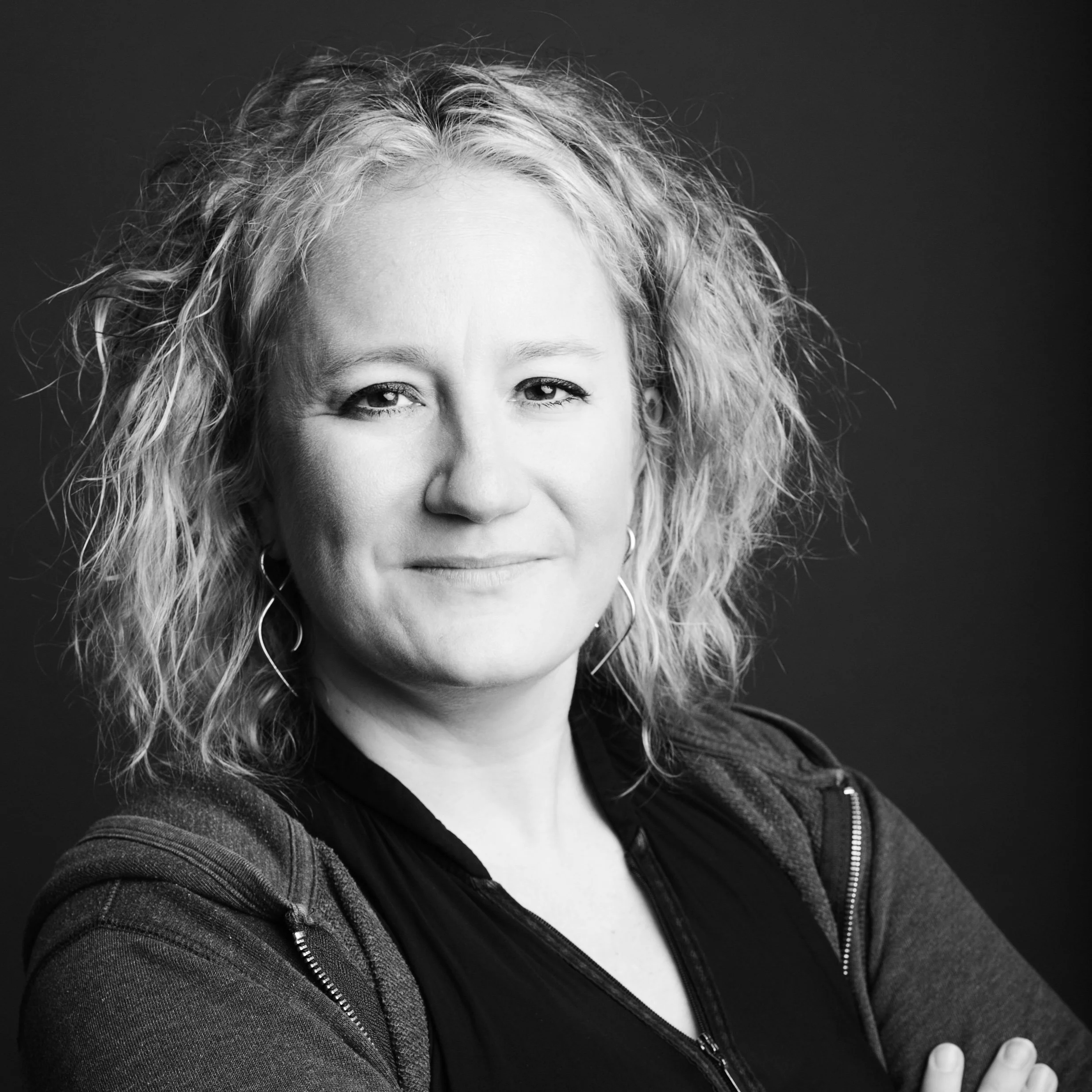
Prof. danah boyd
danah boyd is the Geri Gay Professor of Communication at Cornell University. She studies the intersection of technology and society. Her upcoming book “Data are Made, Not Found: A Story of Politics, Power, and the Civil Servants Who Saved the US Census” is an ethnography of the US Census Bureau, Jenga politics, and the struggle to make democracy’s data in 2020. Her monograph “It’s Complicated: The Social Lives of Networked Teens” examined young people's use of social media. Dr. boyd founded Data & Society and is currently a fellow of AAAS and a trustee of the Computer History Museum.

Asst. Prof. Pei-Sze Chow
Assistant Professor of New Media and Digital Cultures, Wee Kim Wee School of Communication and Information, Nanyang Technological University
Pei-Sze Chow is a critical media scholar studying the social, cultural, and political issues impacting workers in the cultural and creative industries, focusing on media production in Singapore and other Asian contexts. She has been writing about the impacts of AI on the media industries since 2020 and her work on this has been published in AI & Society, European Journal of Cultural Studies, and Media, Culture & Society. She speaks regularly at international academic, industry, and policy events on creative labour and AI governance in the cultural sector and she is the co-founder of the Asian Media Industries Research Network.

Prof. Natali Helberger
Natali Helberger is Distinguished University Professor of Law and Digital Technology with a special focus on AI at the University of Amsterdam and member of the board of directors of the Institute for Information Law (IViR), one of the leading information law institutes worldwide. Helberger is an elected member of the Royal Netherlands Academy of Arts and Sciences (KNAW), and the Royal Holland Society of Sciences and Humanities (KHMW). She received an Honorary Doctorate from the University of Fribourg.

Prof. Paula Helm
Paula Helm is Professor for Empirical Ethics of the Computational at the Center for Critical Computational Studies, Goethe University Frankfurt. Her work brings together Critical AI Studies, Empirical Ethics, and Science and Technology Studies. Trained in anthropology and peace and conflict research, she studies computational systems not only as technical artefacts, but as infrastructures through which values, power relations, and forms of knowledge are organised. Before joining C³S, Helm was Assistant Professor of Ethics and Data Science at the University of Amsterdam, where she served as Scientific Lead of the Empirical Ethics Research Group at the Amsterdam Institute for Advanced Studies and coordinated the MA track Cultural Data & AI. Her research focuses on diversity, platform economies, addiction, data protection, language technology. A central concern in her work is how AI ethics can move beyond abstract principles and public-facing commitments toward reflexive empirical inquiry, infrastructural accountability, and more inclusive forms of technological development.

Asst. Prof. Kate Mays
is an Assistant Professor of Public Communication in the Department of Community Development and Applied Economics at the University of Vermont, where she is also affiliated with the Vermont Complex Systems Institute. A mixed-methods social scientist, she studies the dynamics of emerging technologies in our civic, social, and intrapersonal lives. Her research currently focuses on human-machine communication and perceptions of AI, to better understand how public and expert opinion can inform pro-social and community-minded technology and policy development.

Prof. Jasmine McNealy
Jasmine McNealy is an attorney, critical public interest technologist, and social scientist who studies emerging media & technology with a view toward influencing law and policy. An internationally recognized scholar, her interdisciplinary research examines the intersection of people, emerging technology, and policy with attention to privacy, surveillance, and data governance, while highlighting the impacts on marginalized and vulnerable communities. She is a professor at the University of Florida where she directs the Infrastructure for Communities, Ecology for Data Hub (ICED Hub), as well as chair of the UF Working Group on AI Ethics & Policy. She is also Faculty Associate at the Berkman Klein Center for Internet & Society at Harvard University.
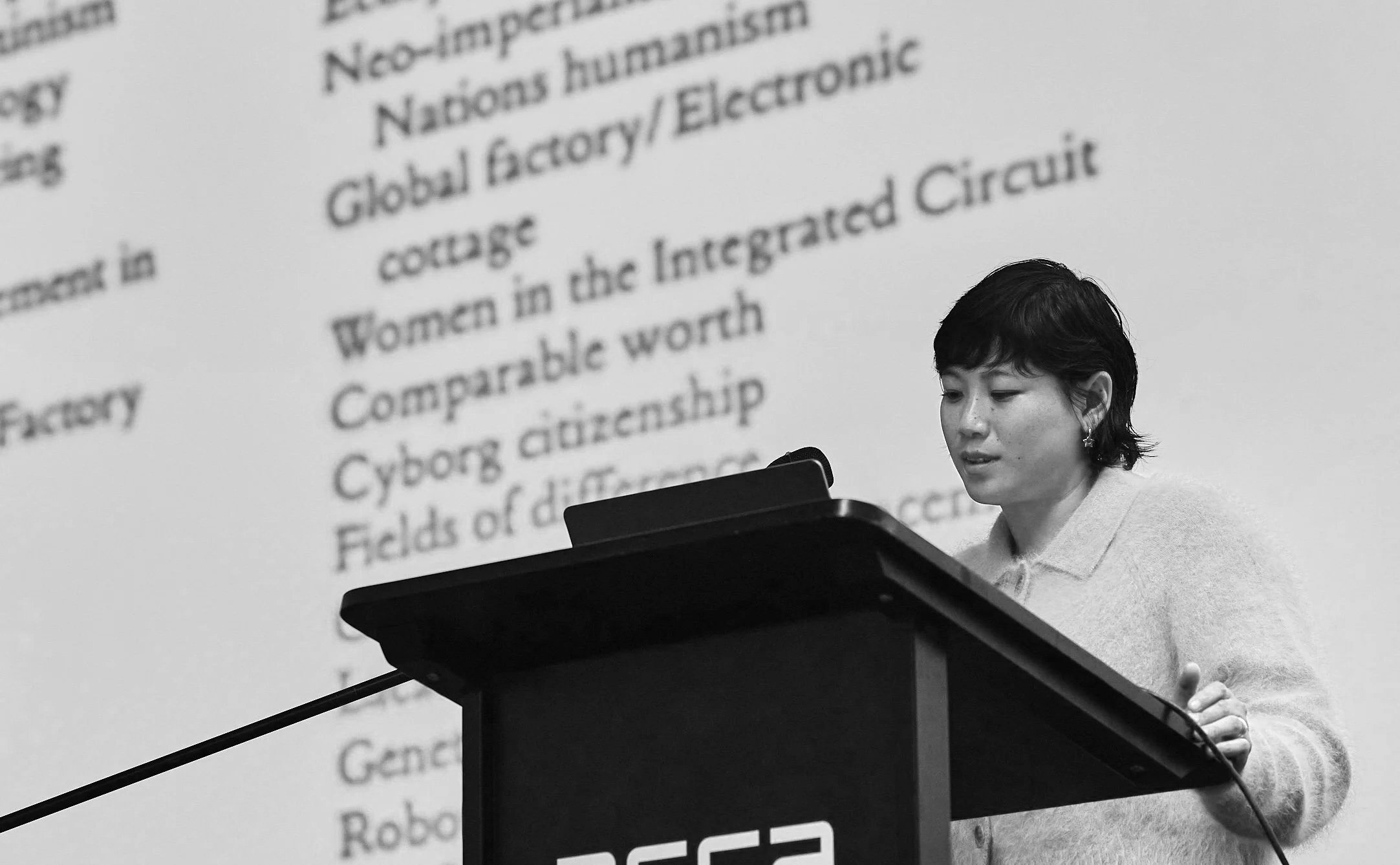
Dr. Thao Phan
Thao Phan is a feminist science and technology studies (STS) researcher who specialises in the study of gender and race in algorithmic culture. She is a Lecturer in Sociology and an ARC DECRA Fellow at the Australian National University (ANU). Thao has published on topics including whiteness and the aesthetics of AI, big-data-driven techniques of racial classification, and the commercial capture of AI ethics research. She is the co-founder and current President of AusSTS—Australia’s largest network of STS scholars.
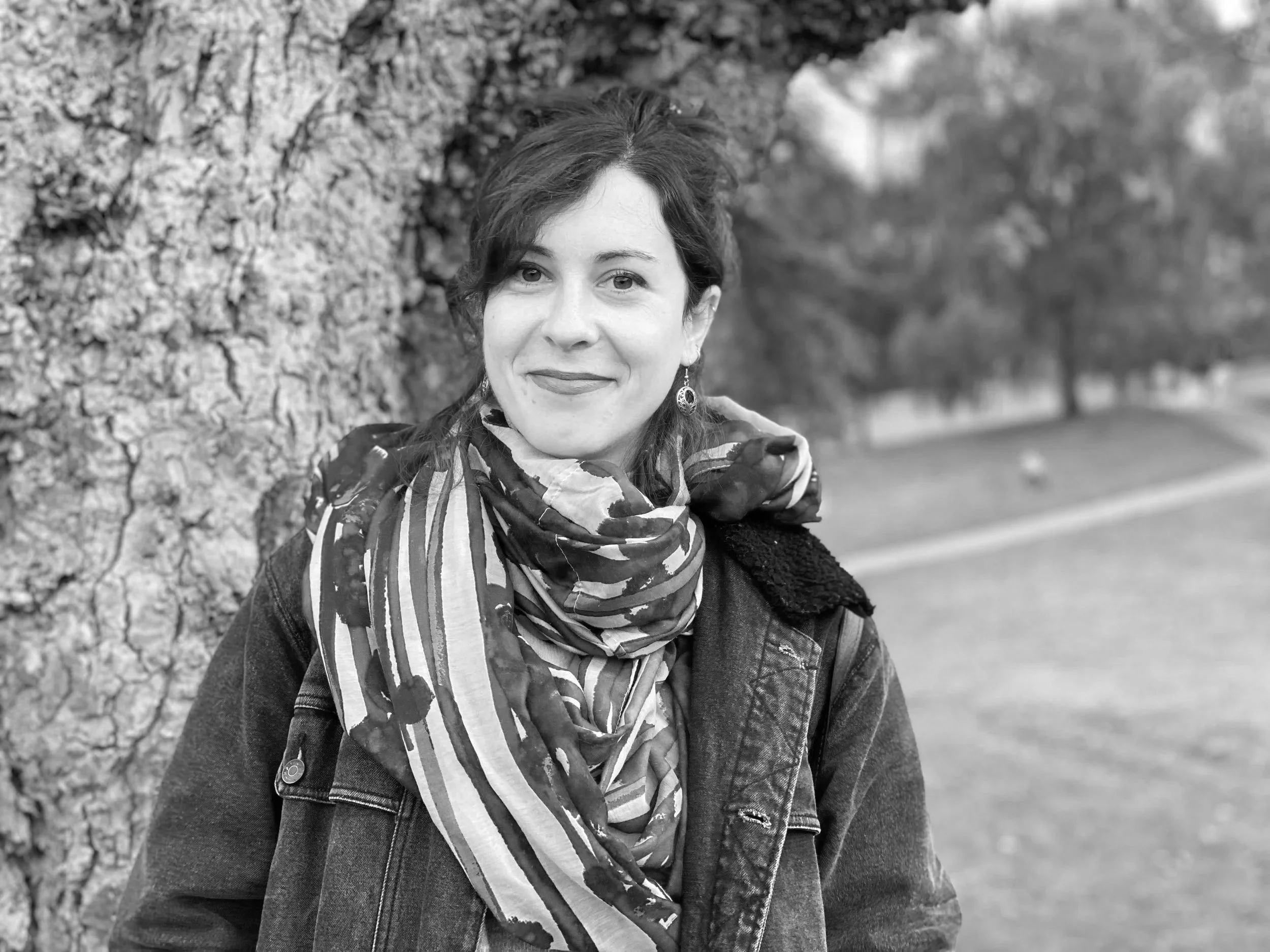
Dr. Ana Valdivia
Ana Valdivia is a Lecturer in AI, Government, and Policy at the Oxford Internet Institute (OII). She investigates how datafication and algorithmic systems are transforming political, social, and ecological territories and communities. Her interdisciplinary work, situated at the intersection of Critical Data/AI Studies and Computer Science, has made significant contributions to digital ecology and the environmental impacts of AI, tech surveillance including biometric systems, and algorithmic fairness and accountability. Her current research agenda focuses on the AI supply chains, by investigating trade-off between environmental costs and social benefits of AI. Ana is currently an Associate Editor for the journal Big Data & Society.